In today’s digital world, where technology has revolutionized the way we take notes, capturing ideas, meetings, and conversations has never been easier. Apps, voice recordings, and digital transcription tools make documenting information almost effortless. However, before these modern conveniences, note-taking in real time was a complex challenge. Enter shorthand—a remarkable writing system invented to simplify the process of quickly jotting down spoken words. To many, shorthand looks like an entirely unrecognizable script, yet its history is deeply rooted in practicality and innovation.
The Origins of Shorthand: From Ancient Greece to the Roman Empire
Shorthand, as we know it, dates back to ancient times. According to the Encyclopaedia Britannica, the Greek historian Xenophon is credited with creating the first shorthand system. It was designed as a way to document speeches and conversations efficiently, capturing ideas as they were spoken.
The practice of shorthand flourished during the Roman Empire. The Romans developed a Latin shorthand system, known as Tironian Notes, named after Marcus Tullius Tiro, a freedman and secretary to Cicero. Tiro’s system was revolutionary for its time, enabling the rapid transcription of speeches and legal proceedings. Remarkably, the Latin shorthand system remained in use for over a thousand years before it gradually faded during the Middle Ages.
Shorthand’s Resurgence: The Victorian Era and Beyond
After centuries of dormancy, shorthand experienced a resurgence during the Victorian Era. This renewed interest coincided with societal changes brought about by the Reformation, where shorthand was used to quickly transcribe Bible translations. Its utility became even more apparent during the Industrial Revolution, when the demand for efficient documentation in legal, business, and journalistic professions grew exponentially.
One pivotal moment in shorthand’s evolution occurred in 1837 when Sir Isaac Pitman introduced a new system of shorthand. Pitman’s system, which focused on phonetics, revolutionized note-taking by representing sounds with symbols, rather than traditional letters. It quickly gained popularity in Britain and became the gold standard for stenographers of the time.
Pitman’s system was introduced to the United States in 1852 by his brother. However, it was later supplanted by another groundbreaking shorthand method: Gregg Shorthand, developed by John Robert Gregg in 1888. Initially called Light-Line Phonography, Gregg Shorthand simplified note-taking further and became the preferred method in America.
What Makes Shorthand So Unique?
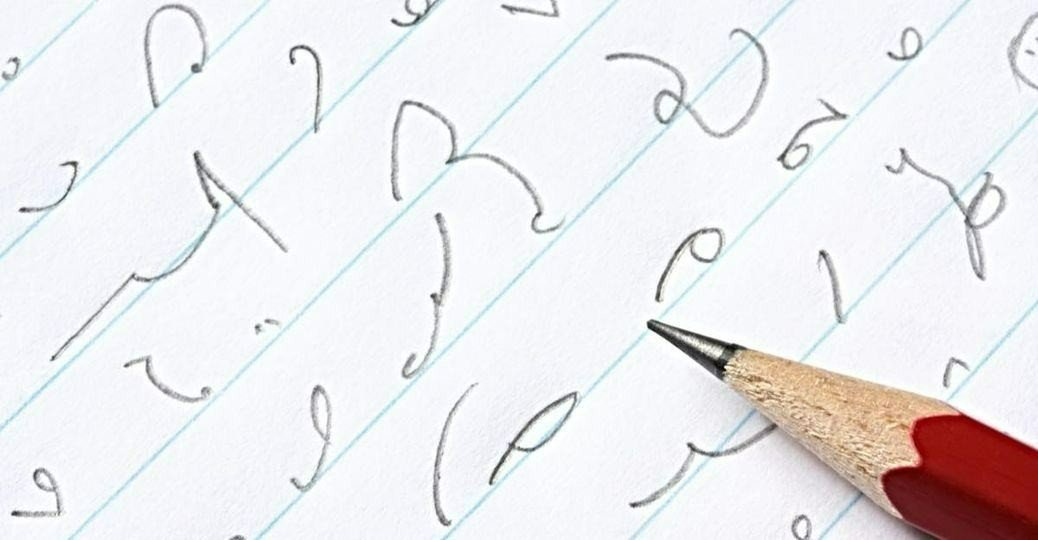
The genius of shorthand lies in its simplicity and efficiency. Unlike “longhand,” which uses full strokes to form words, shorthand reduces letters to their most basic forms. This includes using dots, loops, and lines to represent sounds and eliminate unnecessary details. For example, vowels might be represented by a small dot, while consonants could be simplified into quick curves or straight lines.
This minimalist approach allowed scribes to record words and phrases much faster than traditional writing methods. Gregg Shorthand, for instance, enabled trained individuals to write up to 280 words per minute, making it invaluable for professions that required real-time documentation.
Interestingly, the unique appearance of shorthand has led many to mistake it for an ancient or foreign script. Its use of loops, curves, and symbols often draws comparisons to Arabic or other visually intricate writing systems. However, shorthand is designed for functionality, not aesthetics, focusing on speed and accuracy rather than artistic flair.
Shorthand in Modern Times: A Lingering Relevance
While the rise of digital technology has reduced the widespread use of shorthand, it remains relevant in certain professions. Legal stenographers, for example, rely on machine shorthand to transcribe court proceedings with exceptional speed and precision. Similarly, medical transcriptionists and secretaries in high-paced environments may use shorthand to capture notes during meetings or consultations.
Shorthand’s practicality and efficiency continue to make it a valuable skill for individuals in these fields. Despite its declining prevalence, shorthand serves as a reminder of how humans have innovated to meet the challenges of communication and documentation throughout history.
Shorthand: A Timeless Skill
The story of shorthand is one of ingenuity and adaptation. From its early beginnings in ancient Greece and Rome to its Victorian resurgence and industrial-era advancements, shorthand has continually evolved to meet the demands of its time. Even in today’s digital age, where note-taking has largely transitioned to keyboards and voice recognition, shorthand remains a fascinating example of human creativity.
For those who learn it, shorthand offers a unique and useful skill. Not only does it allow for rapid note-taking, but it also connects learners to a rich historical tradition that spans millennia. In a world that values speed and efficiency, the enduring legacy of shorthand serves as a testament to its enduring relevance.
What Do You Think About Shorthand?
Have you ever tried shorthand or known someone who used it? Whether it’s a distant memory from a secretarial course or a curiosity sparked by its strange and unrecognizable script, shorthand continues to intrigue those who encounter it. Share your thoughts and spread the word about this remarkable writing system so that others can discover its unique history and timeless