Star Trek: The Next Generation (TNG) wasn’t just a sci-fi show—it was a groundbreaking series that shaped the future of television. Premiering in 1987, it redefined the genre with its blend of intelligent storytelling, deep moral dilemmas, and futuristic technology. Over its seven-season run, it captivated audiences, and when it ended in 1994, more than 30 million viewers tuned in to say goodbye.
But even if you’ve watched every episode multiple times, TNG is filled with hidden details, Easter eggs, and behind-the-scenes secrets that many fans have never noticed. Let’s dive into some of the most fascinating aspects of the series that might have slipped under your radar.
1. The Enterprise-D Was Almost Very Different
The USS Enterprise-D is one of the most iconic starships in science fiction, but did you know its design went through significant changes before the final version? The early concept sketches had a much sleeker, almost aerodynamic look, which was later modified to incorporate the familiar saucer section and secondary hull.
Additionally, the bridge of the Enterprise was designed to feel more like a meeting room than a traditional spaceship command center. Unlike the original Star Trek, which had a more military-style control room, TNG’s creators wanted a futuristic workspace that reflected diplomacy, exploration, and intellectual discussion.
2. Patrick Stewart Didn’t Expect to Stay Long
Captain Jean-Luc Picard, played by Patrick Stewart, became one of the most beloved characters in television history. However, Stewart initially signed on thinking the show would last only a single season. He even kept his bags packed, assuming the series would be canceled.
“I was convinced this show wouldn’t last,” Stewart later admitted in an interview.
Fast forward seven years, and Picard had cemented himself as a legendary character, leading to spin-offs, movies, and even a return in Star Trek: Picard.
3. The Show’s Shakespearean Influence Runs Deep
If TNG’s dialogue and themes feel sophisticated, it’s because they were heavily influenced by Shakespearean drama. Patrick Stewart, a classically trained Shakespearean actor, brought a theatrical presence to the role of Picard.
But beyond Stewart, the show often referenced Shakespeare directly. Many episode titles are inspired by his works, including:
- “Thine Own Self” (from Hamlet)
- “All Good Things…” (from King Lear)
- “Sins of the Father” (a common Shakespearean theme)
The showrunners saw Star Trek as more than just space battles—it was a stage for complex storytelling, much like the works of the Bard himself.
4. The Holodeck Was a Writer’s Secret Weapon
The holodeck—TNG’s virtual reality room—was a brilliant storytelling device that allowed writers to explore historical settings, alternate realities, and character-driven plots. However, its real purpose was even more practical: it saved money.
By setting entire episodes in locations like Sherlock Holmes’ London (Elementary, Dear Data) or a 1940s nightclub (The Big Goodbye), the show could cut costs by filming in existing sets rather than creating expensive new alien worlds.
The holodeck also let characters explore deep philosophical ideas, such as artificial intelligence, identity, and the nature of reality—years before those themes became mainstream in sci-fi.
5. The Klingon Language Was Created for the Show
Before Star Trek: The Next Generation, Klingon was little more than a few grunts and phrases. However, linguist Marc Okrand developed a fully functional Klingon language specifically for the franchise.
Fans embraced the language, and today, you can actually learn to speak Klingon fluently. There are Klingon dictionaries, language courses, and even Shakespeare plays translated into Klingon.
“To be, or not to be” in Klingon? “taH pagh taHbe’.”
6. The Borg Were Almost Insects
The Borg, one of the most terrifying villains in Star Trekhistory, almost looked completely different. In early concept discussions, the Borg were envisioned as insectoid creatures, resembling a hive-like race.
However, budget constraints led to the now-famous cybernetic humanoid design. The result? A far more chilling adversary that symbolized the fear of losing individuality to a collective mind.
Their infamous catchphrase—“Resistance is futile”—became one of the most quoted lines in sci-fi history.

7. Some Actors Played Multiple Roles Without Fans Noticing
One of the fun quirks of TNG is that some actors played multiple roles, and many fans never even realized it.
- Jeffrey Combs, who later became a major player in Star Trek: Deep Space Nine, played different alien roles in TNG before landing a recurring part in later series.
- Marc Alaimo, best known as Gul Dukat in DS9, appeared as several different alien characters in TNG.
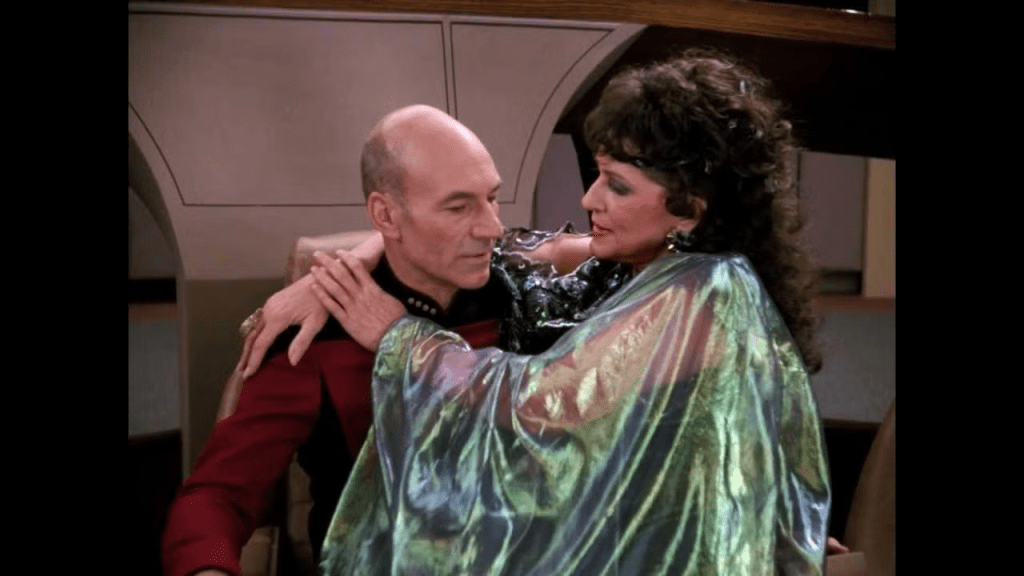
- Majel Barrett, wife of Star Trek creator Gene Roddenberry, voiced the ship’s computer and played Lwaxana Troi, Deanna Troi’s eccentric mother.
8. Data’s Cat, Spot, Changed Genders
Lieutenant Commander Data’s beloved cat, Spot, was a fan-favorite part of the show. However, if you pay close attention, Spot appears as both a male and female cat in different episodes.
In early seasons, Spot was a male orange tabby, but later, the cat is described as female—especially when giving birth to kittens. It’s a small continuity error that has become an amusing trivia fact among Star Trekfans.
9. TNG Paved the Way for Modern Sci-Fi Television
TNG’s influence can’t be overstated. It wasn’t just another sci-fi series—it set the gold standard for the genre. Shows like Battlestar Galactica, The Expanse, and The Orville all draw inspiration from TNG’s mix of deep storytelling, ethical dilemmas, and complex characters.
The show’s vision of the future—one where humanity unites for exploration and progress—continues to inspire scientists, engineers, and dreamers around the world.
Final Thoughts: The Legacy of TNG Lives On
Even decades after its finale, Star Trek: The Next Generation remains a beloved cornerstone of science fiction. Whether it’s the rich storytelling, unforgettable characters, or the hidden details waiting to be discovered, the show still has plenty to offer old and new fans alike.
So next time you watch an episode, keep an eye out for the subtle details and Easter eggs woven throughout the series. You might just find something new in the final frontier.