The fatal shooting of 37-year-old Renee Good during a federal immigration enforcement operation in Minneapolis has ignited a firestorm of public outcry, institutional scrutiny, and a complex national dialogue regarding the limits of state power.1 The incident, which occurred with startling speed in a residential area, was captured in fragments by various bystanders and surveillance cameras, leading to a digital deluge of video footage across social media platforms. As these clips circulate, they have become the Rorschach test of modern American policing, with viewers projecting their own grief, anger, and deep-seated distrust onto the chaotic frames of the encounter. What began as a localized enforcement action has rapidly transformed into a pivotal case study on the intersection of public safety, federal authority, and human tragedy.
The official narrative, provided through formal statements from federal law enforcement agencies, centers on the inherent volatility of the encounter. According to these reports, the officer who discharged his weapon did so under the genuine belief that he was facing an immediate and lethal threat. Authorities assert that as the confrontation reached its peak, Renee Good’s vehicle began to move forward. In that pressurized moment, the officer concluded that the car was being used as a weapon, necessitating the use of deadly force to protect himself and his colleagues. Supporters of this perspective emphasize the “split-second” nature of law enforcement decisions, arguing that it is impossible to judge a high-stakes encounter from the comfort of a retrospective analysis.2 They maintain that officers operating in high-pressure environments must prioritize survival when faced with non-compliance and sudden movement.
However, this account has been met with significant skepticism from local officials, civil rights advocates, and a community already weary of enforcement-related deaths. Critics have scrutinized the available video footage, questioning whether the vehicle’s movement was an intentional act of aggression or a reflexive reaction to the chaos surrounding it.3 The central question for investigators and the public alike is whether the escalation of force was a necessary last resort or a tragic failure of de-escalation tactics. As a result, the Minneapolis community has seen a surge in public demonstrations and town hall meetings, where the demand for transparency is the unifying theme. These gatherings serve as a platform for a broader debate: how can federal agencies maintain public order without sacrificing the trust of the communities they serve?
The role of technology in this case cannot be understated. The viral nature of the incident’s footage has forced a level of transparency that might not have existed a decade ago. It has allowed independent analysts and the general public to dissect the sequence of events from multiple angles, often leading to interpretations that conflict with the initial official statements.4 This “citizen oversight” has put immense pressure on federal investigators to conduct an exhaustive and unbiased internal review. Recognizing the gravity of the public’s concern, agencies have taken the standard step of placing the involved personnel on leave and launching a multi-tiered inquiry to examine every frame of evidence and every protocol followed during the operation.
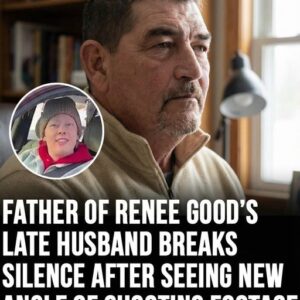
While the political and procedural debates rage on, the human cost of the incident remains focused on the family Renee Good left behind. In a series of public statements, her extended family has navigated the impossible terrain of mourning a loved one whose death has become a political flashpoint.5 One relative, in a particularly poignant interview, offered a nuanced view that stood in stark contrast to the polarized rhetoric of the internet. He admitted that he did not place the entirety of the blame on the individual officer, acknowledging that the situation was likely as confusing and terrifying for the agents as it was for Good. However, he channeled his frustration toward the institutional response, criticizing the clinical and often insensitive nature of the public statements released in the shooting’s aftermath. For the family, the lack of professional empathy from the agencies involved has been a secondary trauma, compounding the loss of a mother, sister, and daughter.
On the national stage, the incident has drawn responses from high-ranking political figures who find themselves walking a delicate tightrope. While offering condolences to the Good family, many have been careful to emphasize the importance of due process, urging the public to wait for the final findings of the official inquiry before reaching a verdict. Yet, the case has inevitably become a talking point in the ongoing discussion regarding federal immigration reform and the oversight of agencies that operate within local jurisdictions. The Minneapolis incident serves as a stark reminder of the potential for friction when federal mandates clash with local community standards of safety and justice.
As the inquiry continues into its second week, investigators are casting a wide net, calling for anyone with additional video evidence or eyewitness testimony to come forward. The goal is to reconstruct the final seconds of Renee Good’s life with surgical precision—accounting for the speed of the vehicle, the verbal commands given by officers, and the positioning of all parties involved. This data-driven approach is aimed at determining if the officer’s fear of “immediate danger” was objectively reasonable under the Fourth Amendment, or if the tragedy was the result of a tactical error.
The Minneapolis enforcement incident is more than just a local news story; it is a mirror reflecting the current state of American society. It reveals a nation deeply divided on the role of authority, yet united in its desire for a system that values human life above all else. Whether the final reports bring a sense of justice or further fuel the flames of discontent remains to be seen. What is clear, however, is that the name Renee Good will remain etched in the consciousness of the city, serving as a catalyst for renewed calls for accountability in federal law enforcement. As the evidence is examined and the “split-second” is slowed down for public viewing, the search for a path that avoids such tragic outcomes continues.