According to officials, the arrest made by federal agents in the Nancy Guthrie kidnapping case is not the significant development that the public has been anticipating.
Authorities report that they have arrested a guy in relation to bitcoin-related texts sent to the Guthrie family. Instead of being proof of involvement in Nancy Guthrie’s disappearance, investigators think the contact was an opportunistic deception, an attempt to capitalize on a family’s concern.
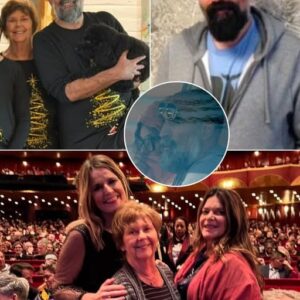
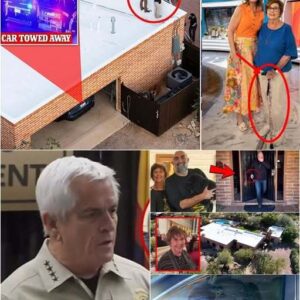
On Sunday, February 1, Nancy Guthrie, 84, the mother of TODAY co-anchor Savannah Guthrie, was reported missing from her home in the Tucson area. Officials have handled the issue as a criminal case from the start. Following ransom demands and public appeals, what started out as a local situation became a widely reported national story. The pressure mounted on investigators, the family, and anybody else observing from the outside as the days went by without any confirmed evidence of life.
Derrick Callella, a resident of Southern California, is the individual who was detained, according to the U.S. Attorney’s Office for the District of Arizona. On February 5, he was arrested near Los Angeles International Airport in Hawthorne, California. Callella faces two federal offenses, according to the prosecution: one for allegedly calling someone without identifying himself “with the intent to abuse, threaten, or harass,” and another for allegedly sending a message demanding a ransom for the release of a kidnapped person.
Investigators claim that Callella got involved in the case soon after the Guthrie family made an emotional and public appeal for assistance. They called on whoever was keeping Nancy to get in touch and show that she was still alive in that video. This plea, which was intended to persuade the appropriate person to take action, also made room for the incorrect type of attention—those who view a crisis as an opportunity to push boundaries or elicit a response.
According to federal authorities, Callella mentioned bitcoin payments in text messages. According to one correspondence reported, the sender was waiting on their end for the transaction and inquired as to whether the family had given the cryptocurrency. Authorities said they don’t think he was a member of a coordinated kidnapping gang or truly in custody of Nancy Guthrie. Rather, they describe the message as a “impostor” ransom demand, an effort to emulate the language of the kidnappers in the hopes that the family would react.
Investigators establish a strict timeline in court records. According to a complaint filed by FBI Special Agent Kerry Witherspoon, the texts were received on February 4, shortly after the family made a public appeal. Authorities claim that Callella made a brief, nine-second phone conversation to a family member around three minutes after the texts were received. That brief call is interpreted by investigators as another attempt to see if he might engage the family in a back-and-forth—any interaction that could provide him with attention, leverage, or a way to manipulate them further.
Additionally, according to the prosecution, Callella later acknowledged that he utilized a voice-over-Internet-Protocol (VOIP) application to send the messages, which is a standard technique for hiding a caller’s name or location. According to investigators, he informed them he was attempting to get a response from the family. If accurate, it points to a motivation that is more driven by impulse than money—someone tinkering with a live wire because they could.
Authorities have taken care to keep Callella’s purported fraud apart from the case’s larger ransom element. Officials explained that a ransom demand sent to a Tucson news outlet on February 2 has not been connected to the two texts that have been attributed to him. According to reports, the previous communication, which was sent via an online tip site, had a bitcoin wallet address meant to be paid. Although investigators have not publicly acknowledged the legitimacy of that ransom message, they have stated that they are taking it seriously and are keeping an eye on that thread as part of their ongoing investigation.
The FBI’s Tucson field office assistant special agent in charge, Jon Edwards, stressed during a briefing on February 5 that any ransom information, whether it comes from the FBI directly, the media, or other sources, is being looked into and assessed. Real or phony, the public may demand a straightforward response, but law enforcement typically views these exchanges as data points. Even a hoax might expose trends, techniques, or weaknesses. It compels investigators to expend time and energy excluding it, at the very least.
There was also a clear warning accompanying the arrest: opportunists will be hunted down. Special Agent in Charge of the FBI Phoenix Directly addressing the issue, Heith Janke stated that the agency would look into anyone attempting to take advantage of or benefit from the circumstance. There was a reason his message was direct. Imposters frequently emerge when a case involves a public figure, an elderly missing person, and a distraught family. They pretend to know more than they actually do, send messages, and demand money. They can be careless at times. They might be calculating at times. In either case, they have the power to sabotage an inquiry and cause further trauma to individuals who are already experiencing a crisis.
Callella has reportedly had legal issues in the past, which has increased the scrutiny surrounding him. He had already been linked to an alleged unemployment benefits fraud as a former Los Angeles County employee. Several county employees were charged by the Los Angeles County District Attorney’s Office in October 2025 with embezzlement of hundreds of thousands of dollars in benefits. Among the defendants was Callella, who was suspected of stealing unemployment benefits between 2020 and 2023. Though it helps explain why investigators and prosecutors are treating the suspected fake with zero tolerance, that history does not show anything about his involvement in the Guthrie case.
The arrest does not provide the Guthrie family with closure; rather, it serves as evidence that outsiders are trying to enter their nightmare. The family reiterated what investigators had said in public statements released on February 4 and February 5: they require evidence of life, not ambiguous requests. The family is ready to converse, according to Savannah Guthrie, but they require assurance that Nancy is still alive and that the person speaking actually has her in a world where voices and visuals can be altered.
That is an important detail. In order to maintain talks, real kidnappers frequently provide a controlled proof-of-life indication. Usually, hoaxers are unable to, and they rely on confusion, hurry, and terror. The family’s public demand for verification is pragmatic as well as sentimental. Anyone claiming involvement is forced to either provide proof or vanish.
According to officials, no one has been taken into custody in connection with the alleged kidnapping of Nancy Guthrie. The inquiry is still ongoing. For information that results in Nancy’s return or the apprehension of those responsible for her disappearance, the FBI has offered a reward of $50,000. Authorities are still going over the tips, examining the evidence, and assembling the events leading up to the morning she disappeared.
The main query at the heart of every update, whether authentic or not, is: where is Nancy Guthrie? One parasite may be eliminated by an arrest for alleged impersonation, but the question that has to be answered remains unanswered.
The case is currently being pursued along two lines: finding and eliminating false leads that take advantage of a family’s suffering and following any plausible avenue that might lead to Nancy’s return.